Every new demand partner in an app has traditionally meant another SDK: more code, more app size, more release cycles and more things that can break. Many monetization teams end up choosing partners based on what engineering can absorb rather than what performs. This post explains the open SDK idea, how standard protocols make it work and what to check before you rely on one.
The SDK sprawl problem
On the web, adding a demand partner often means adding a bidder to an existing auction setup. In apps, it has usually meant integrating that partner’s own SDK, because the SDK handles ad requests, rendering and measurement inside the app.
Each additional SDK carries a cost:
- App size and startup time grow with every library you bundle.
- Release dependency: adding, updating or removing a partner requires a new app version and store review.
- Stability risk: each SDK has its own crashes, memory use and conflicts with other libraries.
- Privacy and compliance work: every SDK needs review for data collection, privacy manifests and consent handling.
- Maintenance: partners ship updates on their own schedules, and falling behind can reduce demand or break features.
The result is predictable. Teams stop testing new partners, even when a new network or SSP (supply-side platform, the system that sells inventory to buyers) might pay better.
What “open” means in an SDK
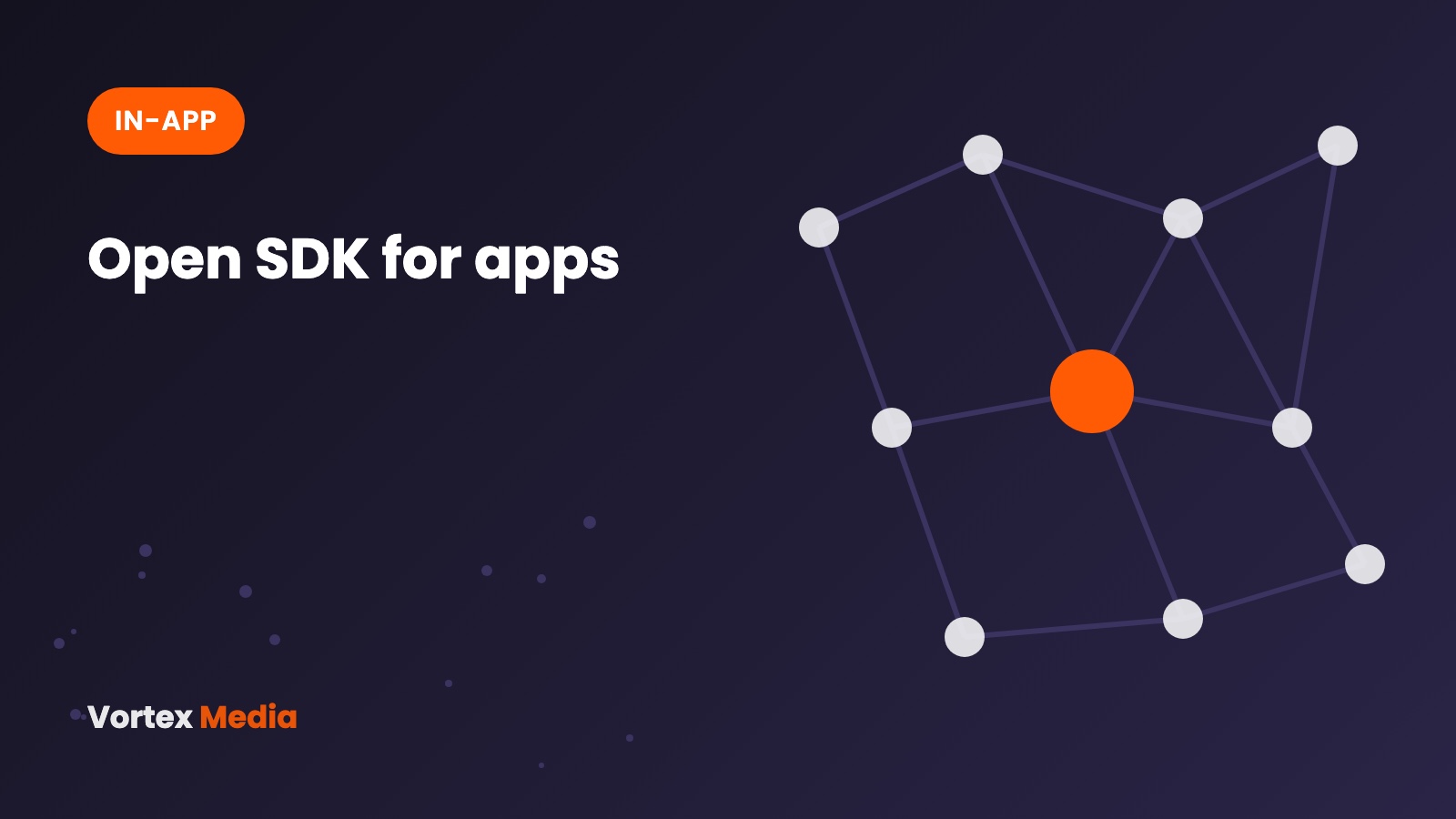
An open SDK separates the integration in your app from the list of demand partners behind it. You integrate one SDK once. Adding a partner becomes a configuration and connection task instead of a code change.
That works because most programmatic demand already speaks shared standards. If the SDK supports those standards, it can talk to any partner that supports them too. The Vortex OpenSDK is built on this idea: one SDK that can connect to any bidding platform, whether it is an ad network you want to try or any SSP.
The standards that make it work
A handful of standards do most of the work. You do not need to implement them yourself, but knowing what they do helps you judge any SDK’s claims.
Prebid Server
Prebid is an open-source header bidding project, and Prebid Server is its server-side component. The app sends one request, the server runs an auction across configured bidders and returns the result. New bidders are added on the server side, so the app does not change.
OpenRTB
OpenRTB (often shortened to oRTB) is the IAB Tech Lab specification for real-time bidding requests and responses. It defines how an impression, the app, the device and privacy signals are described to buyers. An SDK that can send and receive OpenRTB can connect directly to partners that accept it.
VAST
VAST (Video Ad Serving Template) is the IAB Tech Lab standard for describing video ads: the media files, tracking events and click behavior. Support for VAST means the SDK can play video ads from any compliant source, rather than only from one network’s format.
Native
Native ads deliver components (headline, image, description, call to action) that the app assembles in its own style. Standard native support lets demand from different partners render consistently in your layouts.
Alongside these, support for widely used ad libraries matters. The Vortex OpenSDK supports Google IMA and Google Mobile Ads, so teams can keep existing setups while opening up additional demand.
What changes for your team
With an open SDK in place, the workflow for adding demand looks different.
- Commercial agreement: agree terms with the new network or SSP as usual.
- Connection: configure the partner through Prebid Server or a direct OpenRTB connection, rather than adding code.
- Verification: update app-ads.txt so buyers can confirm the partner is authorized to sell your inventory.
- Test: route a share of traffic to the new partner and compare results against existing demand.
- Decide: keep, adjust or remove the partner, again without an app release.
Engineering stays involved in the SDK integration itself and in releases, but routine demand changes move to the monetization team. That shortens the time between having an idea and seeing results.
What to check before you commit
“Open” is an easy word to put on a product page. Before relying on an SDK, ask specific questions:
- Which protocols are supported in production? Prebid Server, OpenRTB, VAST and native should be concrete, documented capabilities.
- Can you bring your own partners? Confirm that you can connect a network or SSP of your choice, not only partners chosen by the SDK provider.
- How are privacy signals passed? Consent strings, platform tracking permission status and child-directed flags must reach every bidder correctly.
- What does reporting look like? You need to see results per partner, per placement and per format to make fair comparisons.
- How are creatives checked? More demand sources mean more creative variety, so ask about creative filtering and fraud checks.
- What is the platform coverage? Confirm native iOS and Android support and how quickly the SDK tracks operating system changes.
Where an open SDK fits with curated demand
Opening your app to any partner does not mean accepting any ad. The best setup combines both: a curated core of premium, brand-safe demand, plus the freedom to test additional partners on your own terms. The open SDK gives you the flexibility; curation and quality controls protect the user experience that makes your inventory valuable.
Key takeaways
- Traditional in-app setups add an SDK per partner, which slows testing and adds size, risk and maintenance.
- An open SDK decouples your app code from your demand list, so partners can be added through configuration.
- Prebid Server, OpenRTB, VAST and native standards are what make one SDK able to reach many partners.
- Routine demand changes can move to the monetization team without new app releases.
- Verify protocol support, bring-your-own-partner freedom, privacy signal handling and reporting before you commit.
The Vortex OpenSDK brings curated demand and editorial video to native iOS and Android apps, with the freedom to connect any bidding platform. See the details on our SDK page.